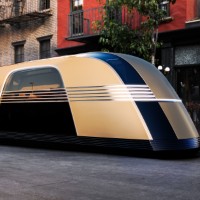
Tesla remains the undisputed focal point of the global transition to EVs, leveraging vertical integration and charging infrastructure to dominate sales worldwide.
Read full Tesla EV strategy guide
Platform & EV Strategy
Unlike legacy carmakers adapting multi-fuel platforms, Tesla builds every vehicle on a dedicated, native EV platform. Central to its approach is structural battery packs, high-pressure megacastings, and advanced software. Instead of complex wiring, Tesla uses central controllers to manage vehicle functions over Ethernet. While high-volume models rely on a scaled 400V architecture, the Cybertruck introduces an 800V system alongside a steer-by-wire setup. The engineering focus prioritizes manufacturing simplicity, low aerodynamic drag, and extreme thermal efficiency.
Current Lineup & Market Positioning
Tesla targets key mass-market and halo segments rather than filling every niche:
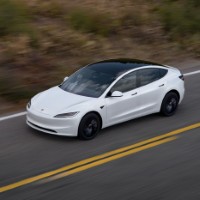
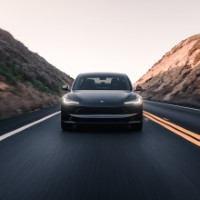
- Executive Saloons: The Model 3 lineup anchors the range. Starting with the single-motor Model 3 Standard offering 318 miles, moving up to the Long Range and dual-motor variants, and topping out with the Model 3 Performance, it dominates the compact executive segment with razor-sharp acceleration and class-leading aerodynamics.
- Family Crossovers: The Model Y addresses global mid-size SUV demand. Available as the accessible Model Y Standard, the Long Range or dual-motor editions, up to the track-focused Model Y Performance, it provides massive cabin utility, huge storage space, and efficient driving.
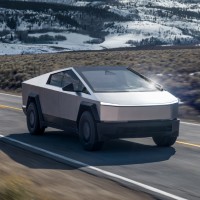
- Utility Pickups: The Cybertruck sits at the extreme end of Tesla's spectrum. Constructed from ultra-hard cold-rolled stainless steel with striking angular styling, it caters to performance truck enthusiasts, primarily in North American markets.
Real-World Usability & Charging Tech
Real-world range and efficiency remain Tesla’s strongest competitive advantages. Standard models use cost-effective LFP batteries that permit charging to 100% daily without rapid degradation, while Performance and Long Range variants use higher density NMC cells. The Supercharger network offers unmatched plug-and-charge convenience, with V3 and V4 charging locations reaching peak DC fast-charging rates up to 500 kW. Route planning, automatic battery preconditioning, and seamless digital keys set the industry standard for frictionless usability.
Reliability, Warranty & Buyer Outlook
Teslas deliver industry-leading powertrain endurance and minimal battery degradation, backed by an 8-year or 100,000 to 120,000-mile battery warranty. However, overall reliability remains mixed due to minor cabin rattles and paint imperfections on older models, and aggressive interior minimalism.
Depreciation is steeper than historic norms due to price cuts by Tesla, though strong second-hand demand and low routine servicing costs maintain attractive long-term ownership.
Current Electric Cars:
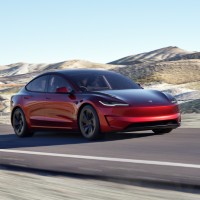
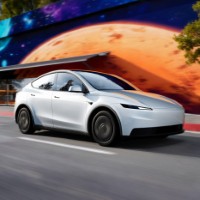
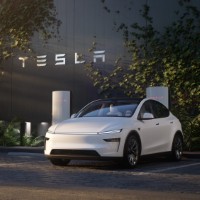
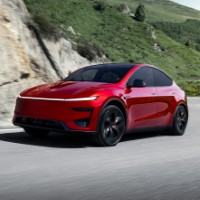
Upcoming Electric Cars:
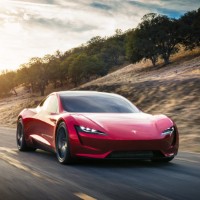
Concept Electric Cars: