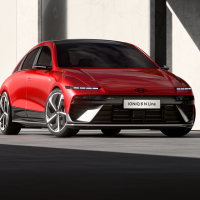
Hyundai has transformed from an unassuming mass-market brand into a formidable engineering powerhouse, aggressively leading the global shift toward electric mobility with highly competitive zero-emission models.
Read full Hyundai EV strategy guide
Platform & EV Strategy
Hyundai uses a smart, split-architecture approach to balance affordability against technical advancements. Entry-level models share flexible, multi-fuel platforms to keep manufacturing costs down, but the manufacturer’s true strength lies in its bespoke EV hardware. Larger models sit on the dedicated 800V Electric-Global Modular Platform which mounts ultra-flat battery packs low within the wheelbase for excellent structural rigidity, interior space, and thermal efficiency. Newer entry-tier additions use a cost-effective 400V setup. Looking forward, Hyundai is unifying its global fleet under the next-generation Integrated Modular Architecture to standardise drive motors and battery modules across all segments.
Current Lineup & Market Positioning
Hyundai covers practically every price point with a purely electric offering:
- Entry-Level & Urban: The compact Inster and the newly released IONIQ 3 aero-hatchback serve budget-conscious city drivers. The crossover KONA Electric fills the gap for small families.
- Executive & Crossovers: The mid-tier is dominated by the core IONIQ sub-brand. The retro-futuristic IONIQ 5 crossover and the aerodynamic IONIQ 6 saloon balance distinct visual flair with interior space.
- Large Family SUVs: The flagship IONIQ 9 three-row SUV sits at the top of the range, offering a massive 110kWh battery and up to 385 miles of range to challenge premium European rivals.
- Performance: The track-focused IONIQ 5 N and IONIQ 6 N serve as high-performance halo cars.
Real-World Usability & Charging Tech
Real-world usability is where Hyundai often outperforms legacy competition. Models built on the 800V E-GMP architecture accept peak DC fast-charging speeds up to 350 kW, allowing an 80% recharge in roughly 18 minutes. The newer 400V IONIQ 3 caps out at 119 kW DC, completing a 10–80% charge in a very-respectable 29 minutes. Range efficiency across the lineup is equally impressive; the streamlined IONIQ 6 achieves up to 338 miles, while the 61kWh IONIQ 3 delivers up to 308 miles. On the software front, Hyundai debuts its new Android Automotive-based Pleos Connect infotainment system alongside wireless smartphone integration, bi-directional Vehicle-to-Load power, and over-the-air updates.
Reliability, Warranty & Buyer Outlook
Hyundai consistently ranks near the top of consumer reliability indexes thanks to dependable power electronics, robust battery conditioning, and proven thermal management. The brand supports buyers with an extensive ownership package, including a 5-year unlimited-mileage vehicle warranty alongside an 8-year/100,000-mile battery health guarantee for at least 70% capacity. While broad market depreciation affects retail values across all EVs, Hyundai’s reputation for rapid charging, low running costs, and solid hardware means its dedicated electric platforms retain residual value better than multi-fuel conversions.
Electric Cars: