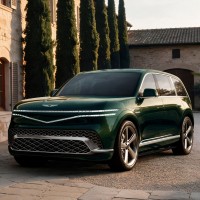
Genesis positions itself as a disruptive challenger in the premium sector, attempting to undercut established German rivals by pairing high-end tactile luxury with cutting-edge electrical architecture.
Read full Genesis EV strategy guide
Platform & EV Strategy
Genesis runs on a dual-track engineering strategy. At the core of its dedicated electric approach is the Hyundai Motor Group E-GMP, a bespoke 800V architecture used for models like the GV60 crossover. This dedicated setup optimizes interior packaging, enables a flat cabin floor, and supports ultra-fast charging. Conversely, models like the Electrified GV70 SUV and Electrified G80 saloon are built on adapted multi-fuel platforms shared with combustion-engine variants. While these converted platforms preserve traditional executive proportions and lower costs, they sacrifice some weight efficiency and frunk storage compared to dedicated EV platforms. For flagship models, Genesis also uses an expanded E-GMP architecture featuring ultra-high-capacity battery packs to accommodate larger vehicle footprints.
Current Lineup & Market Positioning
Genesis bypasses the budget urban segment entirely, focusing strictly on executive and luxury tiers.
- Entry-Level Executive Crossover: The GV60 serves as the brand's gateway.
- Mid-Sized Family SUV: The Electrified GV70 targets the premium family sector.
- Executive Saloon: The Electrified G80 occupies the flagship saloon space, tailored toward corporate fleets and chauffeured transport.
- Flagship Ultra-Luxury SUV: The GV90 acts as the brand's halo vehicle, competing at the highest tier.
Genesis intentionally avoids basic trims, equipping all models with heavy baseline specifications to appeal to business lease users and luxury buyers seeking comprehensive comfort.
Real-World Usability & Charging Tech
Charging performance is a primary strength across the lineup. Equipped with native 800V architecture, E-GMP-based models like the GV60 can accept peak DC rapid charging rates up to 350 kW, enabling a 10% to 80% top-up in as little as 18 minutes under optimal conditions. The converted multi-fuel models also deliver competitive rapid charging, completing the same cycle in around 19 to 25 minutes. Range figures span from roughly 310 miles in dual-motor GV60 trims up to 354 miles in the G80. Real-world efficiency is moderate; heavier dual-motor configurations average between 3.1 and 3.7 mi/kWh in mixed driving. Software integration is robust, featuring wide panoramic displays, integrated battery pre-conditioning, and bidirectional Vehicle-to-Load charging.
Reliability, Warranty & Buyer Outlook
Genesis builds on the strong electrical reliability record of its parent company. Models are sold with a 5-year unlimited-mileage vehicle warranty alongside a standard 8-year or 100,000-mile battery warranty. Depreciation remains the primary drawback. As a relatively young brand competing against entrenched luxury badges like BMW and Mercedes-Benz, Genesis models face steeper initial resale value declines on the second-hand market. However, for buyers retaining vehicles through full warranty terms or business lease agreements, the low maintenance demands and direct-to-consumer service model offset initial depreciation risks.
Electric Cars: