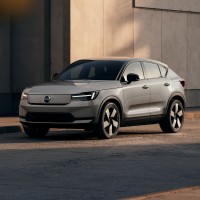
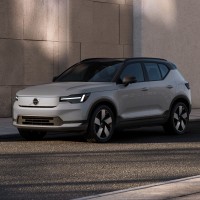
Volvo is transitioning into a fully electric brand, balancing traditional Scandinavian safety with modern technology.
Read full EV strategy guide
Platform & EV Strategy
Volvo’s electric vehicle architecture is transitioning from adapted combustion setups to dedicate EV platforms. The early XC40 and C40 Recharge relied on the multi-fuel CMA architecture with packaging compromises and restrictions on efficiency. In contrast, newer models use bespoke EV platforms from Geely Group. The entry-level EX30 sits on the dedicated Sustainable Experience Architecture, while flagship models like the EX90 and ES90 sit on SPA2. The mid-size EX60 introduces SPA3, introducing mega-casting and core computing technology to maximize efficiency and structural rigidity.
Current Lineup & Market Positioning
Volvo addresses almost every key premium segment:
- Entry-Level & Urban: The EX30 serves as an affordable, urban crossover, complemented by the rugged EX30 Cross Country.
- Compact Family Crossovers: The EX40 and its coupe-styled counterpart, the EC40, cover the premium compact C-SUV sector.
- Executive & Mid-Size Premium: The EX60 and rugged EX60 Cross Country target the crucial mid-size family SUV market, while the ES90 provides a high-end executive saloon alternative to established luxury rivals like BMW.
- Flagship Luxury: The EX90 sits at the top of the range as a tech-focused, three-row luxury SUV.
Real-World Usability & Charging Tech
Real-world range and performance varies across the lineup. The compact EX30 achieves competitive efficiency around 4 mi/kWh in city driving, whereas larger SPA2 vehicles are heavier, hovering closer to 3.5 mi/kWh. Charging speeds are impressive: the EX30 supports up to 153 kW DC fast-charging, while the newest EX60 peaks at 370 kW, enabling 10–80% charges in just 16 minutes with the middle 93 kWh battery. Volvo’s software relies heavily on Google Built-In for navigation and route planning, though early software releases across EX30 and EX90 vehicles faced glitches and delayed features.
Reliability, Warranty & Buyer Outlook
Volvo provides a standard 3-year/60,000-mile vehicle warranty alongside an 8-year/100,000-mile battery guarantee maintaining at least 70% capacity. Long-term reliability reports present a mixed picture: while electric powertrains, motors, and battery packs have proven mechanically robust, eariler software bugs have hurt customer satisfaction. Depreciation reflects the broader premium EV market: models like the EX40 experience typical steep first-year drops, whereas high-demand models like the EX30 maintain stronger value due to accessible pricing and strong appeal.
Electric Cars: