

Polestar has evolved from Volvo’s high-performance motorsport arm into a standalone, design-led sustainable electric performance brand focused on minimalist Scandinavian styling and driving dynamics.
Read full Polestar EV strategy guide
Platform & EV Strategy
Polestar relies on platform architectures shared with its parent company, Geely, alongside bespoke developments. The original Polestar 2 sits on the CMA platform, an adapted multi-fuel architecture shared with the Volvo EX40. However, newer models transition exclusively to dedicated EV platforms. The Polestar 3 uses the SPA2 platform shared with the Volvo EX90, while the Polestar 4 Coupe and SUV sit on Geely’s Sustainable Experience Architecture. For top-tier performance, the Polestar 5 flagship introduces a bespoke, lightweight bonded aluminum spaceframe engineered by Polestar’s UK R&D team, delivering structural rigidity comparable to supercars.
Current Lineup & Market Positioning
Rather than catering to low-cost budget tiers, Polestar places itself firmly in the premium and luxury electric market.
- Executive Fastback: The Polestar 2 serves as the entry point, directly rivaling executive saloons like the Tesla Model 3 and BMW i3.
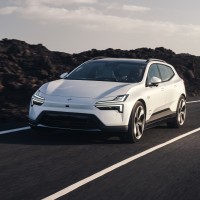
- Mid-Size Performance SUVs: The Polestar 3 targets the luxury family SUV sector against the Porsche Macan Electric, while the Polestar 4 Coupe and 4 SUV address the swooping crossover and practical family estate markets.
- Grand Tourer Flagship: The Polestar 5 steps into the ultra-high-performance luxury space, taking aim at the Porsche Taycan and Audi e-tron GT.
Real-World Usability & Charging Tech
Polestar’s real-world efficiency spans a wide range. The updated rear-wheel-drive Polestar 2 offers competitive real-world consumption and estimated ranges up to 409 miles. Newer models leverage high-capacity battery packs—such as the massive 111 kWh pack in the Polestar 3. Fast-charging capabilities range from 205 kW DC peak rates on 400V setups to a much faster 350 kW on the 800V Polestar 3. Inside, the software is a key strength: Polestar was the pioneer of Google’s Android Automotive OS, offering native Google Maps with battery preconditioning. Unique features include a digital rear-view mirror replacing traditional rear glass on the 4 Coupe and 5.
Reliability, Warranty & Buyer Outlook
As a relatively young brand, Polestar’s long-term reliability profile is tied to Volvo and Geely components. Early software glitches on initial releases were largely resolved via over-the-air updates. Buyers benefit from standard ownership protection with a vehicle warranty of 3 years or 60,000 miles and an extended battery coverage of 8 years or 100,000 miles, guaranteeing at least 70% capacity. Regarding market depreciation, Polestar vehicles experience typical premium EV resale trends: early rapid depreciation followed by stabilization, though strong brand prestige and continuous OTA updates help sustain solid secondary market appeal compared to non-premium competitors.
Current Electric Cars:



Concept Electric Cars:


