

As a pioneer that brought electric mobility to the masses, Nissan has evolved from a single-model EV experiment into a versatile manufacturer covering everything from compact urban hatchbacks to commercial haulers.
Read full Nissan EV strategy guide
Platform & EV Strategy
Nissan operates on a dual-architecture strategy that pairs dedicated EV platforms with shared multi-fuel ones. Its larger electric passenger models utilize the dedicated CMF-EV platform which features a completely flat floor, optimized battery packaging, and maximum interior space relative to its exterior dimensions. For its smaller city models, Nissan leverages group platforms, such as the AmpR Small platform for the electric Micra, while its commercial fleet—including the Townstar EV and Interstar EV—relies on modular multi-energy architectures adapted to accommodate both ICE and electric powertrains efficiently.
Current Lineup & Market Positioning
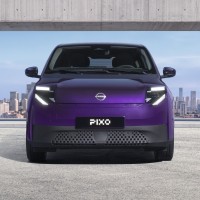
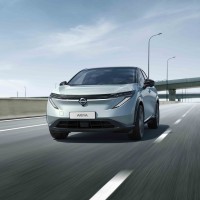
Nissan covers nearly every major budget tier in the EV landscape. At the entry level, the Pixo is an accessible, urban-focused A-segment EV that revives a historic nameplate. the Micra offers an accessible gateway for urban commuters seeking compact, efficient electric transportation. The iconic Leaf continues to anchor the lower-to-mid segment, now as a practical fastback, while the Ariya serves as the brand's flagship mid-size family crossover, competing directly in the premium-leaning SUV market. For performance enthusiasts, the Ariya Nismo elevates the platform with all-wheel drive, upgraded suspension, and track-inspired dynamics. In the commercial sector, Nissan maintains a strong presence with the flexible Townstar EV for light city deliveries and the heavy-duty Interstar EV for larger freight requirements.
Real-World Usability & Charging Tech
Across its range, Nissan delivers competitive efficiency, though real-world usability varies significantly by platform. Modern models like the Ariya feature liquid-cooled battery packs with advanced thermal management, supporting rapid DC charging speeds up to 130 kW and achieving real-world efficiencies between 3.2 and 3.8 miles per kWh under mixed driving conditions. Infotainment and connectivity have advanced substantially, with modern dual-screen setups, over-the-air software updates, and integrated route planning with live charging station data. The driver assistance suite, centered around ProPILOT Assist and single-pedal e-Pedal driving modes, provides intuitive support in both heavy urban traffic and highway cruising.
Reliability, Warranty & Buyer Outlook
Nissan’s long-standing history in electric driving gives it a distinct advantage in hardware durability, with electric motors and power electronics demonstrating strong long-term reliability. Battery health coverage is standard across the lineup, featuring an 8-year or 100,000-mile warranty that guarantees at least 70% capacity. In terms of resale value, older legacy models suffered faster depreciation due to passive battery cooling, but newer platforms like the Ariya and modern Alliance-based hatchbacks show much stronger residual values. Overall, Nissan remains a dependable and well-rounded choice for buyers transitioning to full-electric transport.
Electric Cars:


Electric Vans:

