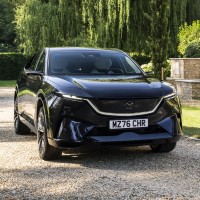
Mazda is attempting to reinvent its historic focus on driver engagement for the zero-emission era by developing strategic partnerships to rapidly scale its lineup.
Read full Mazda EV strategy guide
Platform & EV Strategy
Rather than using internal combustion conversions or waiting for an in-house native platform, Mazda’s latest electric rollout relies on a joint-venture partnership with China's Changan Automobile. Both the 6e fastback saloon and CX-6e crossover sit on their EPA1 scalable EV architecture. This platform features a rear-motor, RWD configuration paired with either an 80 kWh NMC or 78 kWh LFP battery pack, giving both models a balanced weight distribution. While missing the bespoke Japanese engineering some might expect, this modular approach provides a cost-effective route to start their electric journey.
Current Lineup & Market Positioning
Mazda’s pure electric strategy focuses on the competitive mid-size volume segments:
- Executive / D-Segment Fastback: The Mazda 6e serves as a sleeker, electric successor to the discontinued Mazda6 saloon. Positioned to challenge the Tesla Model 3 and BYD Seal, it offers a distinct, coupe-like liftback shape with premium cabin materials.
- Family Crossover: The Mazda CX-6e targets the core mid-size family SUV market, competing head-to-head with the Tesla Model Y, Skoda Enyaq, and Renault Scenic E-Tech.
Real-World Usability & Charging Tech
Equipped with a single rear motor, both models prioritize smooth, progressive power delivery over outright acceleration. The 6e saloon achieves a range of up to 348 miles, while the taller CX-6e SUV manages up to 300 miles. Charging performance is competitive, featuring a 200 kW peak DC fast-charging rate that allows a 10–80% top-up in approximately 24 minutes.
The biggest departure for the brand comes inside. Mazda has abandoned rotary dials and physical buttons in favor of massive central touchscreens—a 14.6-inch display in the 6e and a sweeping 26.5-inch panel in the CX-6e. While tech-heavy, the removal of physical controls compromises usability on the move.
Reliability, Warranty & Buyer Outlook
Because the EPA1 platform is widely deployed and proven across Asian markets, the core battery, motor, and thermal hardware carry reassuring durability. Buyers receive an 8-year/160,000 km battery health warranty alongside standard standard 5-year vehicle coverage.
However, initial market outlook remains mixed. While sharp pricing and striking design aid the upfront appeal, firm ride quality and software-heavy cabin layouts may limit broader appeal among traditional Mazda enthusiasts. Overall depreciation is expected to align with standard industry averages for imported mid-size electric crossovers and saloons.
Electric Cars: