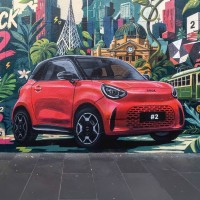
Smart has evolved from quirky, ultra-compact city cars into a stylish, Geely-backed all-electric brand targeting the competitive modern EV market.
Read full smart EV strategy guide
Platform and EV Strategy
Under its joint venture between Mercedes-Benz and Geely, has Smart transitioned away from its legacy internal combustion roots to Geely’s dedicated Sustainable Experience Architecture. This bespoke EV platform allows for a completely flat floor, maximized interior packaging within a remarkably compact exterior footprint, and flexible rear- or all-wheel-drive motor layouts. Unlike legacy manufacturers retrofitting electric powertrains into shared fuel platforms, Smart uses native EV engineering, resulting in exceptional structural rigidity, optimized weight distribution, and efficient heat management.
Current Lineup and Market Positioning
Smart no longer builds the iconic fortwo; instead, the portfolio is anchored by a rapidly expanding family of premium all-electric crossovers. The lineup starts with the Smart #1, a compact family SUV, followed by its sleek, coupé-styled sibling, the Smart #3. For buyers seeking greater utility and road presence, the larger Smart #5 pushes the brand into the mid-size SUV segment. Positioned neatly against premium rivals like the Kia EV5 and Tesla Model Y Standard, Smart targets style-conscious urban buyers and young families looking for a distinctive interior design and tech without the luxury price.
Real-World Usability and Charging Tech
On the road, the SEA platform delivers strong efficiency, with official ranges spanning from 190 miles for base urban specifications up to over 360 miles for larger battery variants in the #5. Charging performance is a notable strength: the advanced architecture supports DC rapid charging up to 150kW on compact models and up to 400kW on higher trims, permitting a 10% to 80% top-up in well under 30 minutes. Inside, the cabin centers around an expansive touchscreen interface powered by modern computing hardware. While it is vibrant and highly responsive, the heavy reliance on menus for climate and drive settings can be frustrating.
Reliability, Warranty and Buyer Outlook
Build quality is a massive leap forward from legacy Smart city cars. Buyers receive a standard manufacturer warranty alongside the industry-standard 8-year/100,000-mile battery guarantee, which protects against excessive capacity loss. On the second-hand market, Smart models face the typical steep initial depreciation common to premium EVs, making nearly-new used examples particularly appealing for value. Overall, Smart delivers a design-forward proposition for motorists prioritizing modern EV packaging, digital connectivity, and rapid turnaround on public charging networks.
Current Electric Cars:


Upcoming Electric Cars: