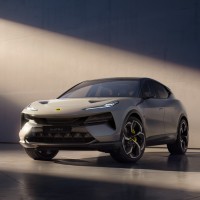
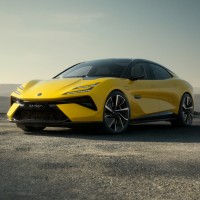
Lotus has completed a radical transformation from a niche manufacturer of featherweight sports cars into a high-performance luxury electric brand backed by Geely.
Read full EV strategy guide
Platform & EV Strategy
Lotus has completely abandoned internal combustion platforms for its new global lineup, anchoring its electric transition on the bespoke Electric Premium Architecture, derived from Geely’s Sustainable Experience Architecture. This dedicated 800V skateboard chassis is engineered exclusively for high-output BEVs, allowing for low-mounted battery packs, dual-motor configurations, and advanced chassis control. This lets Lotus achieve ideal weight distribution and a low center of gravity, though the massive battery packs mean these vehicles weigh roughly 2.5 tonnes, a stark contrast to historic Lotus philosophies.
Current Lineup & Market Positioning
Lotus completely skips mass-market budget tiers, focusing strictly on high-end luxury, performance, and executive buyers:
- Executive Saloons: The Emeya serves as a high-power hyper-GT grand tourer, targeting performance-oriented executives considering the Porsche Taycan or Audi e-tron GT.
- Family SUVs: The Eletre represents the core of the lineup, a massive, ultra-luxury hyper-SUV packed with high-end tech, competing with luxury electric haulers like the Porsche Macan Electric and BMW iX.
- Halo Hypercars: The limited Evija hypercar showcases absolute performance limits with nearly 2,000 hp.
Real-World Usability & Charging Tech
Thanks to its 800V electrical architecture, Lotus boasts top-tier charging speeds, supporting peak DC fast-charging rates between 350kW and 400kW. Under ideal conditions, filling the massive battery packs from 10% to 80% takes under 20 minutes.
However, real-world efficiency is a weakness. Weighing around 2.5 tonnes, models like the Eletre 900 deliver poor efficiency, frequently dipping down to around 2.5 mi/kWh in real-world driving. While the ranges are rated up to 373 miles for lower-spec variants, enthusiastic driving can drop actual highway range well below 250 miles.
The interior features Lotus Hyper OS, running on dual Qualcomm Snapdragon chips with Unreal Engine graphics. It supports deployable LiDAR hardware for advanced semi-autonomous features, alongside responsive, feature-rich touchscreens.
Reliability, Warranty & Buyer Outlook
As a low-volume luxury brand navigating complex software-defined platforms, long-term reliability remains unproven. Buyer peace of mind is backed by a 5-year/75,000-mile vehicle warranty alongside an 8-year/100,000-mile battery health guarantee, ensuring protection against significant capacity degradation. As six-figure performance EVs across the industry face aggressive value drops on the secondary market, it wouldn't be surprising to see Lotus do the same. Nevertheless, for buyers seeking rapid 800V charging, striking road presence, and incredible dual-motor acceleration, Lotus delivers a distinct modern alternative to established German luxury brands.
Electric Cars: