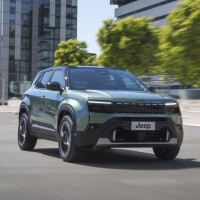
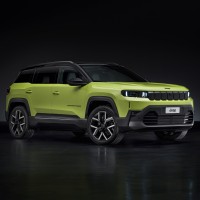
Jeep is transitioning its rugged American heritage into the zero-emission era with compact, European-tailored electric SUVs.
Read full Jeep EV strategy guide
Platform & EV Strategy
Rather than relying on bespoke, ground-up EV platforms, Jeep leverages multi-fuel architectures shared across parent company Stellantis. The compact Avenger sits on the e-CMP2 modular platform, designed to accommodate pure-electric, hybrid, and petrol powertrains on the same production line. Meanwhile, larger offerings like the electric Compass transition to the group's STLA Medium platform. While multi-energy underpinnings save manufacturing costs, they require structural compromises in interior packaging and battery placement compared to dedicated EV platforms.
Current Lineup & Market Positioning
Jeep’s electric lineup focuses tightly on popular crossover segments rather than covering every budget tier:
- Entry-Level Crossovers: The Avenger Electric serves as the brand's primary EV offering. Ittargets urban buyers and small families wanting a compact footprint with chunky SUV styling.
- Family SUVs: The mid-sized electric Compass expands the lineup to tackle the competitive C-SUV family sector with a larger footprint and extended range.
- Executive Saloons & Commercial Fleets: Jeep completely bypasses executive saloons, hatchbacks, and commercial fleet vans, remaining strictly an SUV-focused brand.
Real-World Usability & Charging Tech
Equipped with a 54 kWh battery and a single 156 hp front-mounted motor, the Avenger Electric achieves a range of up to 248 miles. In real-world driving, expectation drops to around 160 miles in cold winter conditions and 210 miles in summer weather. DC fast charging peaks at 100 kW, taking roughly 30 minutes for a 10% to 80% top-up. Infotainment relies on a 10.25-inch Uconnect touchscreen with wireless Apple CarPlay and Android Auto, though software responsiveness can occasionally feel lagged.
Reliability, Warranty & Buyer Outlook
Jeep historically faces mixed reliability scores in owner surveys, but its EV models benefit from simplified electric drivetrains with fewer moving parts. New vehicles come with a standard 3-year/unlimited-mileage manufacturer warranty, while the high-voltage lithium-ion battery carries an 8-year/100,000-mile warranty covering capacity loss below 70%.
Because mainstream Stellantis-derived electric crossovers face heavy market competition, used models experience steep initial depreciation. Early second-hand Avengers quickly lose around 40% to 45% of their original list price after three years, making pre-owned models attractive for bargain hunters, but less favorable for private buyers paying full retail upfront.
Current Electric Cars: