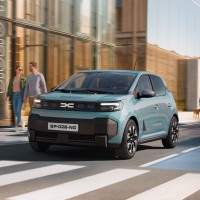
Dacia is redefining the low-cost automotive landscape by proving that zero-emission urban transport does not need to carry a premium price tag.
Read full Dacia EV strategy guide
Platform & EV Strategy
Unlike manufacturers that develop dedicated, high-cost electric platforms from the ground up, Dacia leverages parent company Renault Group’s shared architecture strategy to keep production costs minimized. Its first and only electric model, the Spring, uses the AmpR Small platform, a purpose-built, pure-electric A-segment architecture designed for compact urban mobility. Rather than pushing for ultra-long range or massive battery packs, Dacia focuses on weight reduction and minimal resources. By scaling down component sizes and sharing hardware across Renault’s global supply chain, the brand delivers zero-emission driving without the heavy costs associated with EVs.
Current Lineup & Market Positioning
Dacia operates on an uncompromising "essentials-only" philosophy, positioning itself squarely at the entry level of the passenger EV market. Its current fully-electric lineup consists of just the Spring, an ultra-compact urban hatch designed for city dwellers, delivery drivers, and price-sensitive fleet operators seeking minimal cost of ownership. The brand does not offer executive saloons, mid-sized family SUVs, or long-distance load luggers in electric form. Instead, it deliberately leaves premium segments to competitors, carving out a niche as the most accessible fully-electric passenger car provider in the European market.
Real-World Usability & Charging Tech
Because the Spring weighs substantially less than most modern EVs, it achieves exceptional real-world energy efficiency. However, performance capabilities are modest, given its small 27kWh battery and lightweight motor outputs. Charging tech is similarly basic: standard home AC charging takes several hours, while optional DC fast charging is capped at a modest 50 kW. Inside, software integration is streamlined. Rather than equipping complex, power-hungry displays, lower trim levels use a clever smartphone dock with a dedicated application, while higher trims feature a simple touchscreen offering core navigation and basic media connectivity.
Reliability, Warranty & Buyer Outlook
Dacia vehicles benefit from simplified engineering, meaning there are fewer complex electronics or hydraulic systems to break down over time. Long-term ownership expectations are solid due to proven Renault componentry, though cabin plastics and interior finishings reflect budget constraints. Battery health is backed by a standard 8-year or 100,000-mile manufacturer warranty covering capacity retention. In terms of resale value, the Spring experiences initial depreciation typical of budget city cars, but its low initial purchase price shields owners from the severe losses seen on high-end EVs. Overall, for buyers seeking pure utility over prestige, Dacia represents a very low-risk entry into electric vehicle ownership.
Electric Cars: